
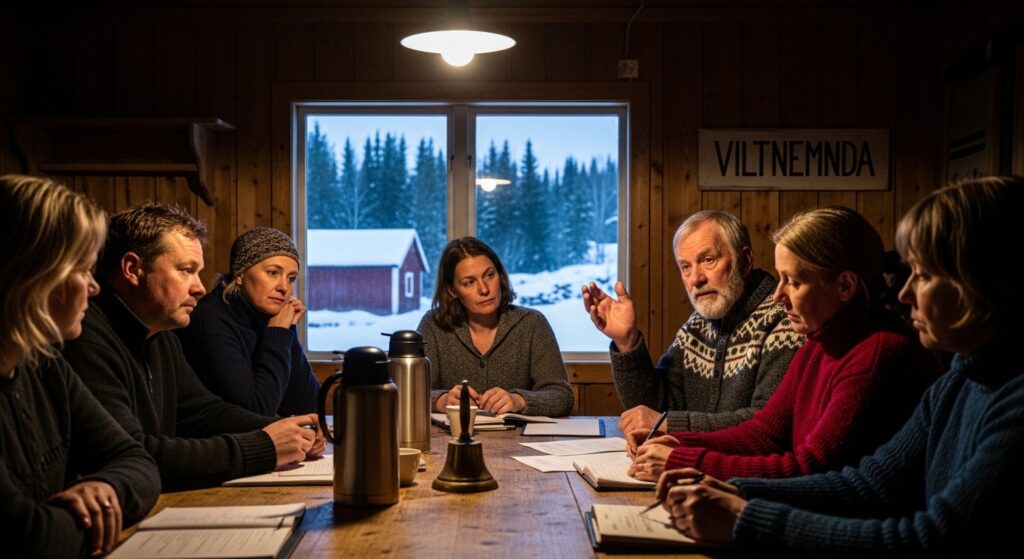
On a cold autumn morning in rural Norway, a group of local representatives gathers around a modest table in a municipal building. Outside, forests stretch toward the horizon, and signs of wildlife activity are everywhere. Inside, the discussion is calm but consequential. Decisions made here will influence hunting quotas, animal welfare, road safety, and the balance between human life and nature. This is the everyday reality of Viltnemnda, a local wildlife committee that plays a surprisingly influential role in Norwegian society.
Although Viltnemnda rarely appears in international headlines, it represents one of the most practical and effective models of decentralized environmental governance in the world. For entrepreneurs, policy thinkers, and systems designers, it offers a compelling real-world case of how local authority, expert knowledge, and community trust can work together to manage complex natural systems.
Understanding the Role of Viltnemnda in Norwegian Society
Viltnemnda is a municipal-level committee responsible for wildlife management, particularly for larger game species such as moose, deer, and reindeer. Established under national wildlife legislation, each municipality in Norway appoints its own Viltnemnda, usually composed of locally knowledgeable members with experience in land use, hunting, forestry, or environmental stewardship.
What makes Viltnemnda notable is not just its legal authority, but its grounding in local reality. Members are expected to understand migration patterns, population pressures, and conflicts between wildlife and human activity. Rather than enforcing distant policies, Viltnemnda adapts national frameworks to local ecosystems, ensuring decisions feel legitimate and practical to the people most affected by them.
Why Local Wildlife Governance Still Matters in a Digital Age
In an era dominated by centralized platforms, algorithms, and large-scale data models, it is easy to assume that effective governance must also be centralized. Viltnemnda challenges this assumption. Its strength lies in proximity: proximity to land, to people, and to consequences.
Wildlife management is not abstract. An overpopulation of moose can devastate forests, increase traffic accidents, and strain farming communities. Underpopulation, on the other hand, disrupts ecosystems and cultural traditions tied to hunting. Viltnemnda sits at the intersection of these pressures, making decisions that are both ecological and social.
For founders and system architects, Viltnemnda demonstrates how distributed decision-making can outperform centralized control when conditions are complex and context-dependent.
How Viltnemnda Balances Ecology, Economy, and Culture
The work of Viltnemnda goes beyond animal counts. It operates within a triangle of competing interests: environmental sustainability, economic activity, and cultural heritage. Hunting, for example, is not only a population control mechanism but also a deeply rooted tradition and a source of income in many regions.
Viltnemnda must therefore weigh data from wildlife surveys against the lived experiences of hunters, farmers, and residents. This balancing act requires judgment, not just metrics. It is one reason why committees are composed of people rather than automated systems.
This human-centered approach allows Viltnemnda to maintain public trust, an asset that many modern institutions struggle to preserve.
Decision-Making Inside Viltnemnda
Although Viltnemnda works locally, its decisions follow structured processes aligned with national regulations. Population estimates, damage reports, and seasonal data inform discussions. From there, the committee determines hunting quotas, approves management plans, and advises municipal authorities.
To illustrate the scope of responsibilities handled by Viltnemnda, consider the following overview:
| Area of Responsibility | Practical Impact |
|---|---|
| Population Management | Prevents overgrazing and ecosystem imbalance |
| Hunting Quotas | Supports sustainable harvest and local economies |
| Traffic Safety | Reduces wildlife-related accidents |
| Conflict Resolution | Mediates between landowners, hunters, and authorities |
This combination of ecological insight and administrative authority is what makes Viltnemnda effective despite its relatively small scale.
Viltnemnda as a Model for Decentralized Systems
From a systems-thinking perspective, Viltnemnda is a living example of decentralized governance done right. Authority is delegated downward, but accountability remains upward. National laws set boundaries, while local committees interpret and implement them.
This structure mirrors successful digital architectures, where core protocols remain stable but local nodes adapt to specific conditions. Entrepreneurs building platforms, marketplaces, or governance tools can draw inspiration from how Viltnemnda aligns incentives across levels without relying on heavy enforcement.
Technology and Data in Modern Viltnemnda Work
While Viltnemnda is rooted in tradition, it is not resistant to innovation. Modern committees increasingly rely on digital reporting systems, geographic data, and population modeling tools. Hunters submit harvest data electronically, and wildlife observations are logged into shared databases.
What is striking, however, is that technology supports rather than replaces human judgment. Data informs discussions, but final decisions are still made through dialogue and consensus. This hybrid approach avoids the pitfalls of purely algorithmic governance while still benefiting from modern tools.
Challenges Facing Viltnemnda Today
Like any institution, Viltnemnda faces challenges. Climate change alters migration patterns and food availability, making historical data less reliable. Urban expansion increases human-wildlife conflict, while younger generations may feel less connected to traditional wildlife management practices.
There is also the ongoing challenge of volunteer fatigue. Many Viltnemnda members serve alongside full-time jobs, motivated by civic duty rather than compensation. Ensuring continuity, expertise transfer, and long-term engagement requires ongoing support from municipalities.
Yet despite these pressures, Viltnemnda has shown remarkable resilience, adapting gradually without losing its core identity.
Lessons for Leaders, Founders, and Policymakers
For readers outside environmental management, offers several transferable lessons. First, legitimacy matters. Decisions are more likely to be respected when they are made close to those affected. Second, expertise does not always mean formal credentials; lived experience can be equally valuable.
Finally, demonstrates that governance does not need to be loud or visible to be effective. Quiet, consistent decision-making often produces more durable outcomes than sweeping reforms or disruptive interventions.
The Future of Viltnemnda in a Changing World
Looking ahead, Viltnemnda is likely to evolve rather than disappear. As environmental pressures intensify, the need for locally informed decision-making will only grow. The committees may integrate more advanced data tools, collaborate more closely across regions, and engage younger participants through education and transparency.
What is unlikely to change is the core principle that defines Vitnemnda: trust in local knowledge guided by shared rules. In a world searching for sustainable governance models, that principle feels increasingly relevant.
Conclusion
Viltnemnda is more than a wildlife committee. It is a reminder that effective systems often succeed not because they are complex, but because they are well-aligned with human behavior and local reality. By blending law, ecology, culture, and judgment, has quietly sustained balance across generations.
For anyone interested in how societies manage shared resources, stands as a compelling, real-world example of governance that works—without spectacle, but with lasting impact.