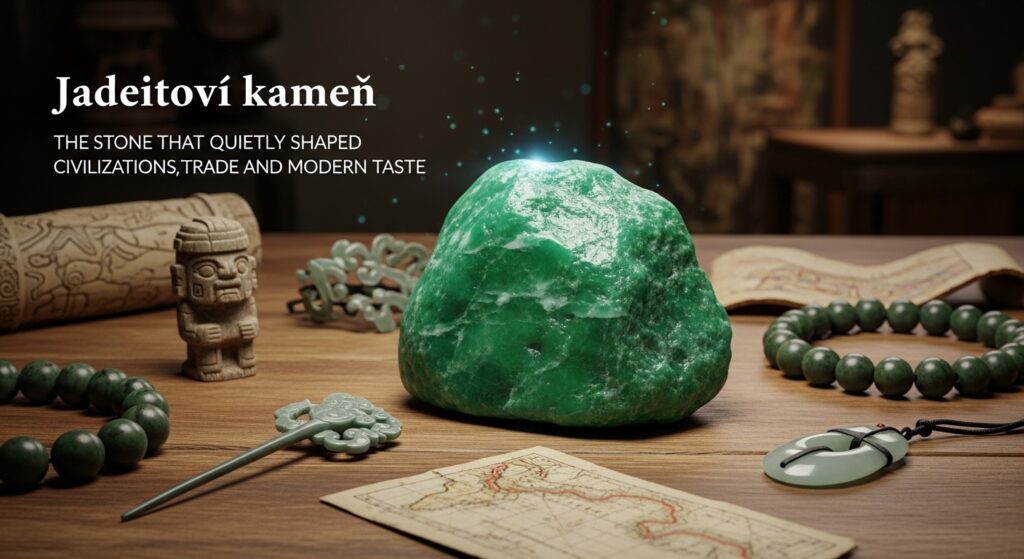
The first time a jadeitový kameň passes through your hands, it rarely announces its value. It feels cool, almost modest, with none of the flash you might expect from a prized gemstone. Yet for centuries, this quiet stone has carried empires’ beliefs, traders’ fortunes, and artisans’ reputations. Long before it became a symbol of refined luxury, jadeite was a material of meaning—one that connected people to nature, power, and permanence.
Today, jadeitový kameň sits at an unusual crossroads. It is at once ancient and contemporary, spiritual and commercial, rare yet increasingly visible in global markets. Understanding why requires looking beyond surface beauty and into the stone’s deep cultural, geological, and economic roots.
What Exactly Is Jadeitový Kameň?
Jadeitový kameň refers to jadeite, one of the two minerals commonly known as jade. Unlike nephrite, jadeite is a sodium aluminum silicate formed under extreme pressure. This geological origin gives it a dense structure, vibrant translucency, and a hardness that allows it to be carved with extraordinary detail while remaining durable enough for everyday wear.
What makes jadeite particularly distinctive is its color range. While many associate jade with green, jadeitový kameň can appear in lavender, icy white, yellow, black, and even rare shades of red. The most coveted stones, however, display an intense emerald-green tone often described as “imperial.” This color is not merely aesthetic; it is the result of trace chromium within the stone, a natural accident that dramatically increases its value.
From Sacred Object to Global Commodity
For much of its history, jadeitový kameň was not considered jewelry in the modern sense. In ancient societies, it was a material of ritual and authority. Tools, ceremonial blades, and symbolic ornaments were carved from jade because it was believed to embody durability, virtue, and moral clarity.
The turning point came when high-quality jadeite deposits were discovered in what is now Myanmar. From there, jadeitový kameň traveled along trade routes into imperial courts, particularly in China, where it became inseparable from philosophy, governance, and personal ethics. Scholars wrote of jade as a mirror of human character—hard yet refined, strong yet gentle.
In modern times, this symbolic weight has not disappeared. Instead, it has merged with global luxury markets, where jadeite is appraised with the same seriousness as diamonds or rare colored gemstones.
Why Jadeitový Kameň Still Matters Today
In a world of fast fashion and disposable trends, jadeitový kameň stands apart. Its appeal lies partly in its resistance to time. Unlike materials that fade or tarnish, jadeite can be worn daily for decades and still retain its luster. This durability has given rise to the belief that jade grows more beautiful the longer it is worn, absorbing the life and energy of its owner.
For collectors and investors, jadeite represents scarcity. High-grade stones are rare, and mining conditions are complex, both geologically and politically. As a result, the finest jadeitový kameň has shown long-term value stability, particularly in Asian markets where cultural appreciation runs deep.
Designers, meanwhile, are rediscovering jadeite as a modern material. Minimalist settings, contemporary cuts, and cross-cultural aesthetics have introduced jadeitový kameň to new audiences who value authenticity over excess.
The Science Behind Its Beauty
Jadeitový kameň is formed deep within the Earth’s crust, under pressures far greater than those that create many other gemstones. This environment compresses its crystal structure tightly, resulting in exceptional toughness rather than brittleness.
Color variation in jadeite is caused by trace elements. Chromium produces vivid green, iron contributes to darker shades, and manganese can create lavender hues. Transparency, often described as “water,” is another critical quality factor. Stones with high translucency appear to glow from within, a trait that dramatically increases desirability.
Unlike faceted gemstones, jadeite is usually cut and polished into smooth cabochons or carved forms. This approach highlights texture and internal structure rather than sparkle, reinforcing jade’s understated elegance.
Grades, Treatments, and Trust
Not all jadeitový kameň on the market is equal. Professionals classify jadeite into categories based on treatment. Natural, untreated jadeite is the most valuable and is often referred to as Type A. Stones that have been chemically treated or dyed may look appealing but lack long-term stability and collector value.
For buyers, certification is essential. Reputable gemological reports confirm whether a stone has been treated and provide transparency in a market where appearance alone can be misleading. This emphasis on trust mirrors jade’s cultural association with integrity and honesty.
Jadeitový Kameň in the Global Market
The modern jade market blends tradition with global commerce. Auctions featuring exceptional jadeite regularly attract international attention, with prices rivaling those of fine diamonds. Demand is strongest in East Asia, but appreciation is growing in Europe and North America as consumers seek materials with story and substance.
Interestingly, jadeitový kameň also appeals to younger buyers who value sustainability and longevity. A single jade piece can be passed down generations, making it both a personal adornment and a family artifact. In this sense, jade aligns perfectly with the contemporary shift toward mindful ownership.
A Practical Comparison of Jade Types
| Feature | Jadeitový kameň (Jadeite) | Nephrite |
|---|---|---|
| Mineral Type | Sodium aluminum silicate | Calcium magnesium silicate |
| Hardness | Slightly harder, more brittle | Slightly softer, tougher |
| Color Range | Green, lavender, white, red | Mostly green and creamy tones |
| Market Value | Generally higher, especially imperial green | Usually lower |
| Cultural Prestige | Strongly linked to imperial and luxury use | Associated with tools and early artifacts |
This comparison highlights why jadeitový kameň has become the dominant choice in high-end jewelry and collections.
Symbolism Beyond the Stone
Beyond geology and commerce, jadeitový kameň continues to carry symbolic meaning. It is often associated with balance, wisdom, and protection. While these beliefs vary by culture, they contribute to jade’s emotional value. People do not simply wear jade; they form relationships with it.
This emotional connection is one reason jadeite remains relevant despite changing tastes. It offers something many modern products lack: continuity between past and present, function and philosophy.
The Future of Jadeitový Kameň
Looking ahead, jadeitový kameň faces both opportunity and challenge. Ethical sourcing and environmental responsibility are becoming central concerns, particularly as mining regions face scrutiny. At the same time, digital platforms are making jade education more accessible, allowing buyers to learn, compare, and invest with greater confidence.
As tastes evolve, jadeite is likely to continue its quiet reinvention. Its future will not be driven by trend cycles but by its enduring ability to resonate across cultures and generations.
Conclusion
Jadeitový kameň does not compete for attention. It waits. In a marketplace obsessed with immediacy, its value lies in patience, depth, and restraint. From ancient rituals to modern design studios, jadeite has survived not because it dazzles, but because it endures.
For those willing to look beyond surface brilliance, jadeitový kameň offers something rare: a material that connects beauty with meaning, history with modern life, and personal expression with collective memory.